Ingredients
/
Vegetables
/
Butternut Squash
 Peak season
Season
Sep–Dec
Ruled by
☽ Moon
Calories
36 kcal
Protein
1.1 g
MW references
3
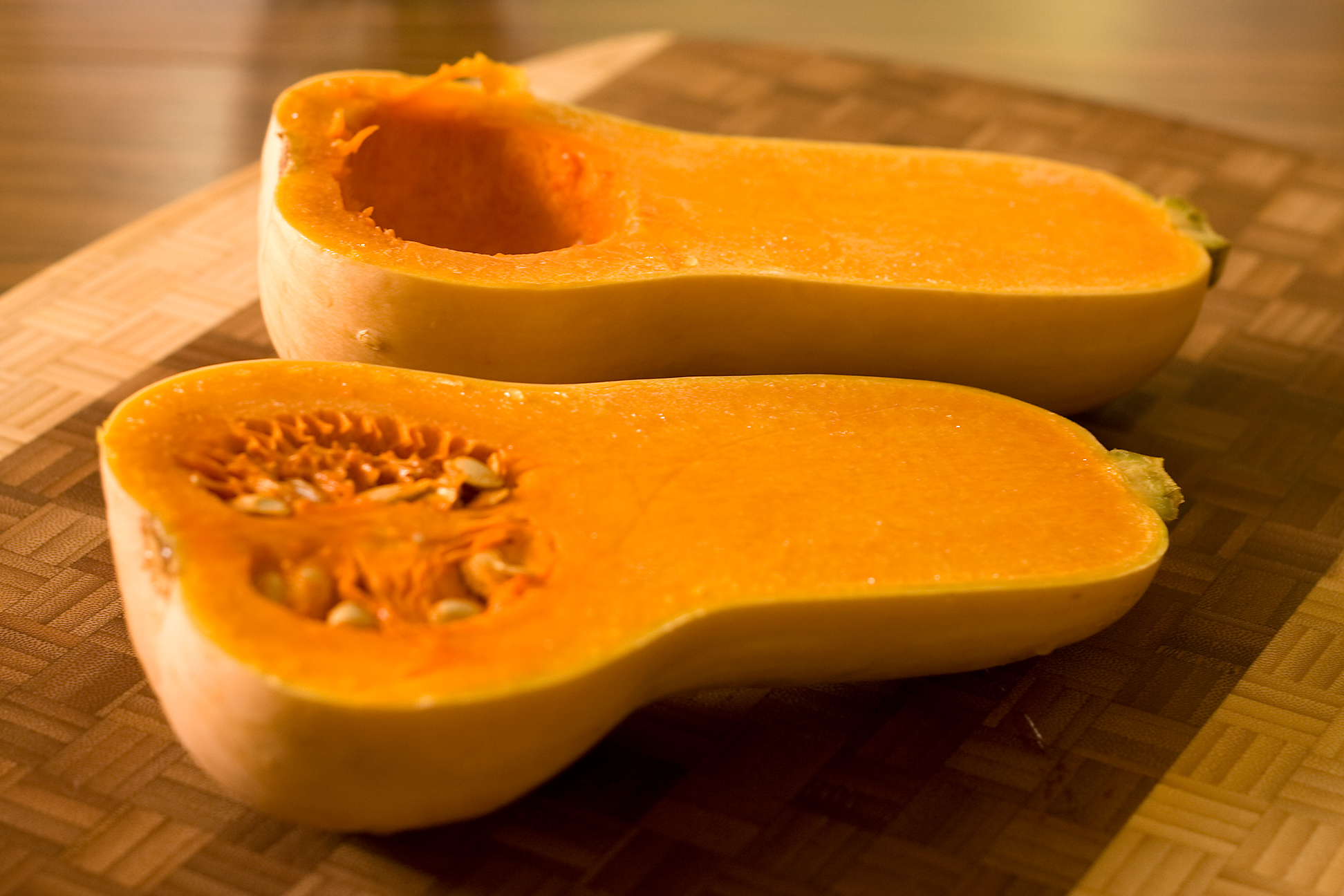
Butternut Squash
Butternut squash reaches its peak between September and December, offering a sweet, nutty flavor that defines autumnal cooking. Its excellent storage capabilities ensure a steady supply through winter, while global imports fill the summer gap. It is a superb source of vitamins A and C, potassium, and magnesium.
Nutrition facts
Per 100 g
Energy36 kcal / 155 kJ
Protein1.1 g
Carbs8.3 g
— of which sugars4.5 g
Fat0.1 g
Salt4 mg Na
Vitamin C21.0 mg
Iron0.70 mg
Figures are estimates per 100 g from reference data and may differ from the product you use. Always check the packaging for accurate nutrition and allergen information. Not a substitute for professional dietary advice.
Reference data McCance & Widdowson 2021
Squash, butternut, raw · 13-355 · DG
Analytical and literature sources
Energy & Proximates
Energy36.00kcal
Energy155.00kJ
Water86.40g
Protein1.10g
Fat0.10g
Carbohydrates8.30g
of which sugars4.50g
of which starch3.40g
Fibre (AOAC)—g
Fibre (NSP)1.60g
Alcohol—g
Fat Breakdown
Total fat0.10g
Saturated—g
Monounsaturated—g
Polyunsaturated—g
Trans—g
Omega-3—g
Omega-6—g
Cholesterol—mg
Minerals
Sodium4.00mg
Potassium350.00mg
Calcium48.00mg
Magnesium34.00mg
Phosphorus33.00mg
Iron0.700mg
Copper0.070mg
Zinc0.100mg
Selenium—µg
Iodine—µg
Vitamins
Vitamin A605.00µg
Vitamin D—µg
Vitamin E1.830mg
Vitamin C21.00mg
Thiamin (B1)0.100mg
Riboflavin (B2)0.020mg
Niacin (B3)0.700mg
Vitamin B60.150mg
Vitamin B12—µg
Folate27.00µg
More from Vegetables