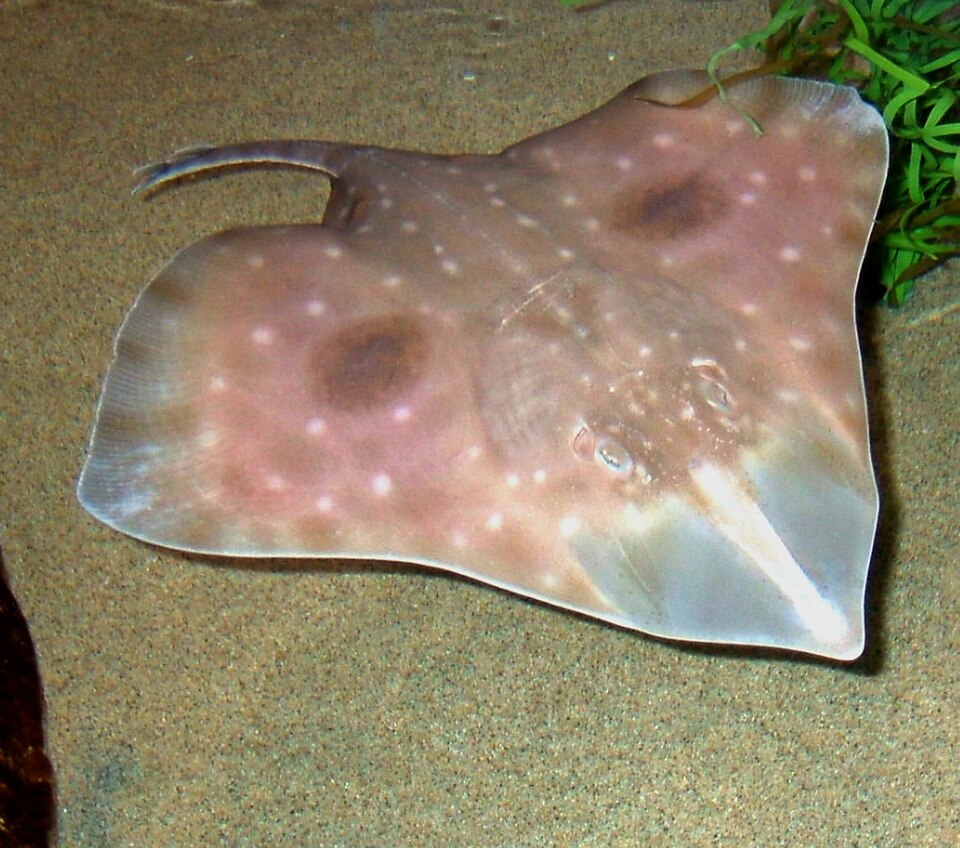
Skate
Fish & Seafood
Seasonal
☽
Moon
Skate peaks from November to February.
It is at its best during the winter when the wings are thickest. Because skate are slow-growing and late to mature, they are vulnerable to overfishing. To ensure sustainability, avoid the Common Skate, which is a protected species. Instead, look for Thornback Ray or Blonde Ray sourced from fisheries with strict size limits and quotas, preferably caught using static nets or lines to reduce bycatch.
Nutrition facts
Per 100 g
Energy64 kcal / 272 kJ
Protein15.1 g
Fat0.4 g
Salt120 mg Na
Iron0.50 mg
Figures are estimates per 100 g from reference data and may differ from the
product you use. Always check the packaging for accurate nutrition and allergen
information. Not a substitute for professional dietary advice.
Reference data McCance & Widdowson 2021
Skate, raw · 16-143 · JA
Data from Seafish Industry Authority and literature sources
Energy & Proximates
Energy64.00kcal
Energy272.00kJ
Water80.70g
Protein15.10g
Fat0.40g
Carbohydrates—g
of which sugars—g
of which starch—g
Fibre (AOAC)—g
Fibre (NSP)—g
Alcohol—g
Fat Breakdown
Total fat0.40g
Saturated—g
Monounsaturated0.10g
Polyunsaturated0.20g
Trans—g
Omega-3—g
Omega-6—g
Cholesterol—mg
Minerals
Sodium120.00mg
Potassium260.00mg
Calcium40.00mg
Magnesium30.00mg
Phosphorus180.00mg
Iron0.500mg
Copper0.020mg
Zinc0.500mg
Selenium—µg
Iodine20.00µg
Vitamins
Vitamin A—µg
Vitamin D—µg
Vitamin E—mg
Vitamin C—mg
Thiamin (B1)0.120mg
Riboflavin (B2)0.200mg
Niacin (B3)2.000mg
Vitamin B60.370mg
Vitamin B126.000µg
Folate—µg
 Out of season