Dover Sole
Fish & Seafood
Seasonal
☽
Moon
Dover Sole peaks from June to January.
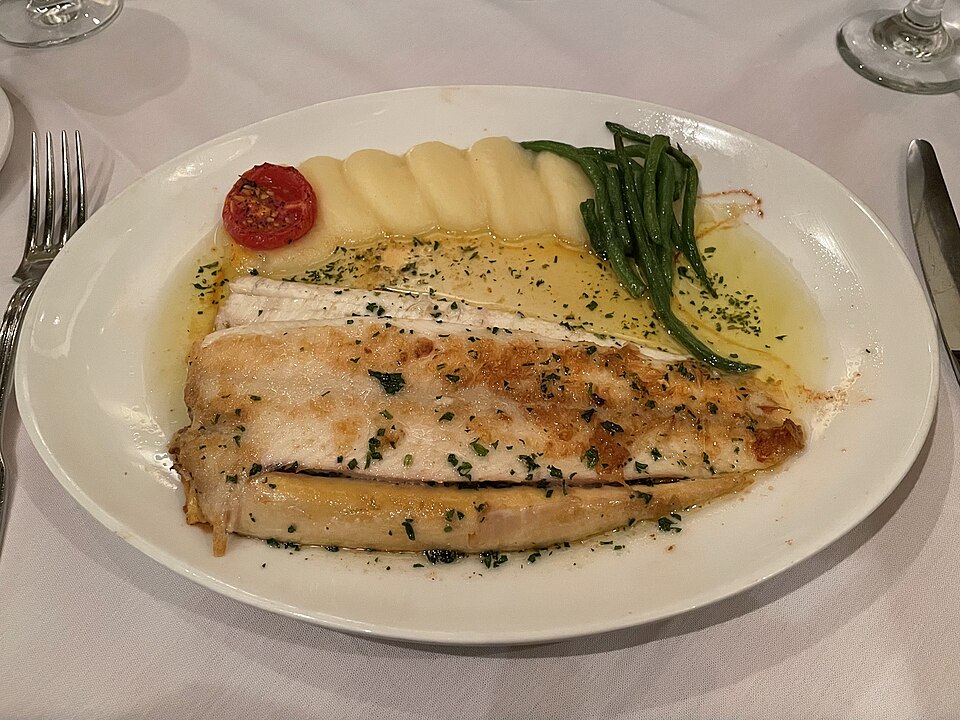
Widely considered the finest of all flatfish, it is at its best during the summer and autumn months. Unlike most fish, Dover Sole benefits from being aged for a day or two to allow its firm, meaty texture and sweet, butter-like flavor to fully develop. From a conservation perspective, it is important to choose fish caught in the Eastern English Channel, where stocks are currently well-managed and maintained at sustainable levels.
Nutrition facts
Per 100 g
Energy89 kcal / 374 kJ
Protein18.1 g
Fat1.8 g
Salt100 mg Na
Iron0.80 mg
Figures are estimates per 100 g from reference data and may differ from the
product you use. Always check the packaging for accurate nutrition and allergen
information. Not a substitute for professional dietary advice.
Reference data McCance & Widdowson 2021
Dover sole, raw · 16-039 · JA
Literature sources
Energy & Proximates
Energy89.00kcal
Energy374.00kJ
Water80.00g
Protein18.10g
Fat1.80g
Carbohydrates—g
of which sugars—g
of which starch—g
Fibre (AOAC)—g
Fibre (NSP)—g
Alcohol—g
Fat Breakdown
Total fat1.80g
Saturated—g
Monounsaturated—g
Polyunsaturated—g
Trans—g
Omega-3—g
Omega-6—g
Cholesterol50.00mg
Minerals
Sodium100.00mg
Potassium310.00mg
Calcium29.00mg
Magnesium49.00mg
Phosphorus200.00mg
Iron0.800mg
Copper0.020mg
Zinc0.400mg
Selenium23.00µg
Iodine—µg
Vitamins
Vitamin A—µg
Vitamin D0.001µg
Vitamin E—mg
Vitamin C—mg
Thiamin (B1)0.060mg
Riboflavin (B2)0.100mg
Niacin (B3)3.000mg
Vitamin B6—mg
Vitamin B12—µg
Folate—µg
 Peak season