Grapes
Fruit
Seasonal
♀
Venus
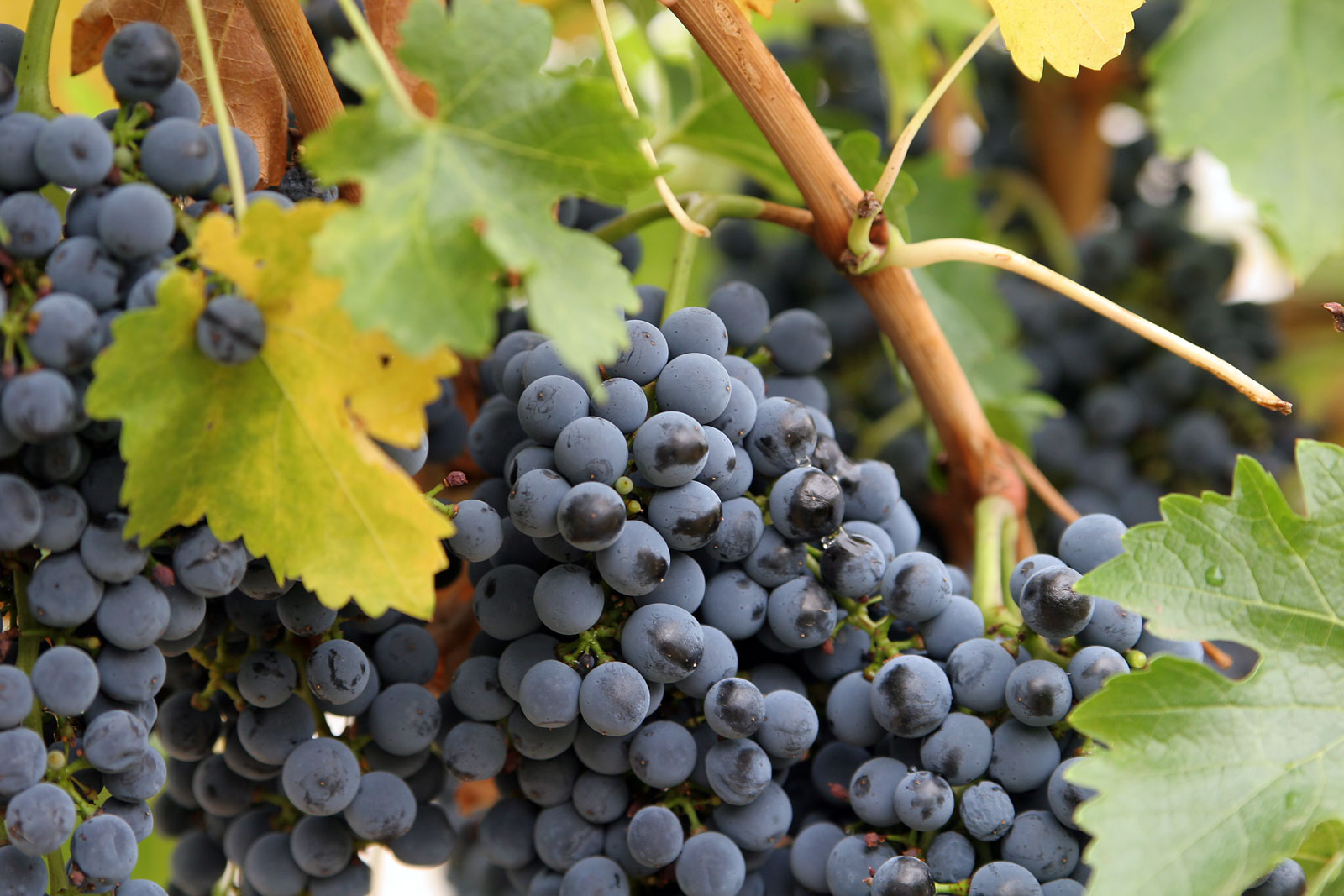
Grapes are available year-round, but the peak quality and lower prices occur during two distinct periods: August to October for European and North American harvests, and February to May for Southern Hemisphere imports (South Africa and Chile).
While they are never truly out of season due to global sourcing, the mid-winter months (November to January) often see higher prices and a dip in crunchiness as supply transitions between hemispheres.
Nutrition facts
Per 100 g
Energy64 kcal / 272 kJ
Protein0.7 g
Carbs15.8 g
— of which sugars15.8 g
Fat0.2 g
— saturated0.1 g
Fibre1.3 g
Salt1 mg Na
Vitamin C2.0 mg
Iron0.23 mg
Figures are estimates per 100 g from reference data and may differ from the
product you use. Always check the packaging for accurate nutrition and allergen
information. Not a substitute for professional dietary advice.
Reference data McCance & Widdowson 2021
Grapes, average, weighed with pips · 14-351 · FA
Calculated from average grapes (14-350) using edible conversion factor of 0.98
Energy & Proximates
Energy64.00kcal
Energy272.00kJ
Water80.30g
Protein0.70g
Fat0.20g
Carbohydrates15.80g
of which sugars15.80g
of which starch—g
Fibre (AOAC)1.30g
Fibre (NSP)0.70g
Alcohol—g
Fat Breakdown
Total fat0.20g
Saturated0.06g
Monounsaturated0.01g
Polyunsaturated0.06g
Trans—g
Omega-3—g
Omega-6—g
Cholesterol—mg
Minerals
Sodium1.00mg
Potassium211.00mg
Calcium10.00mg
Magnesium7.00mg
Phosphorus19.00mg
Iron0.230mg
Copper0.090mg
Zinc0.001mg
Selenium—µg
Iodine1.00µg
Vitamins
Vitamin A1.00µg
Vitamin D—µg
Vitamin E0.190mg
Vitamin C2.00mg
Thiamin (B1)0.070mg
Riboflavin (B2)0.010mg
Niacin (B3)0.200mg
Vitamin B60.040mg
Vitamin B12—µg
Folate6.00µg
 Peak season